Buy suedklang.eu ?
We are moving the project
suedklang.eu .
Are you interested in purchasing the domain
suedklang.eu ?
domain@kv-gmbh.de · 0541-91531010
Buy suedklang.eu ?
Can sound waves be accelerated?
Sound waves cannot be accelerated in the same way that physical objects can be. Sound waves travel at a constant speed in a given medium, which is determined by the properties of that medium. However, the intensity or amplitude of a sound wave can be increased, which can give the perception of the sound being louder or more forceful. This increase in intensity does not change the speed at which the sound wave travels. **
Could sound waves be frozen?
No, sound waves cannot be frozen. Sound waves are vibrations that travel through a medium, such as air, water, or solid materials. Freezing typically involves the transformation of a substance from a liquid to a solid state due to a decrease in temperature, but sound waves are not physical substances that can undergo this kind of transformation. Instead, they are a form of energy that propagates through a medium. **

Similar search terms for Waves
Top-Angebote
Products related to Waves:




-
Do sound waves consist of atoms?
No, sound waves do not consist of atoms. Sound waves are vibrations that travel through a medium, such as air, water, or solids, by causing particles in the medium to vibrate. These vibrations create changes in pressure that our ears detect as sound. Atoms are the basic building blocks of matter and do not make up sound waves themselves. **
-
Are sound waves transmitted through walls?
Yes, sound waves can be transmitted through walls, although the extent to which they are transmitted depends on the material and thickness of the wall. For example, thin walls made of materials like drywall or wood will allow more sound to pass through than thick walls made of concrete or brick. Sound waves can also be reflected, absorbed, or diffracted by walls, which can affect how much sound is transmitted through them. Overall, while walls can block some sound, they do not completely prevent sound waves from passing through. **
-
What are sound waves in physics?
Sound waves in physics are a type of mechanical wave that travels through a medium, such as air, water, or solids. They are created by the vibration of an object, which causes the particles of the medium to compress and expand, transmitting the energy of the vibration. Sound waves are characterized by their frequency, wavelength, and amplitude, and they can be described using the principles of wave mechanics, such as the wave equation and the Doppler effect. In addition to being the basis for the sensation of hearing, sound waves are also used in various applications, such as ultrasound imaging and communication technologies. **
-
Do sound waves generally rise upwards?
No, sound waves do not generally rise upwards. Sound waves are longitudinal waves that travel in all directions from their source. They propagate through a medium by causing particles in the medium to vibrate back and forth in the same direction as the wave is traveling. As a result, sound waves spread out in all directions from their source, rather than rising upwards. **


Are water waves only transverse waves or also longitudinal waves?
Water waves are primarily transverse waves, meaning that the particles of the medium (water) move perpendicular to the direction of the wave. However, water waves also have a small component of longitudinal motion, where the particles move parallel to the direction of the wave. This combination of transverse and longitudinal motion is what allows water waves to carry energy and propagate through the medium. **
How can one visualize and print audio waves?
One can visualize and print audio waves using software programs specifically designed for audio editing and visualization, such as Audacity or Adobe Audition. These programs allow users to import audio files and display the waveform graphically, making it easy to visualize the amplitude and frequency of the audio. Users can also use these programs to print the waveform by taking a screenshot of the visualization or exporting it as an image file. Additionally, there are online tools and websites that offer audio waveform visualization and printing capabilities, allowing users to upload their audio files and generate waveform images for printing. **
Top-Angebote
Products related to Waves:
-
Goldwell Dualsenses Curls & Waves Shampoo 1000ml & Curls & Waves CondiSave on your favourite Shampoo and Conditioner with this exclusive duo pack. Shampooo: Enriched with microPROtec complex and milk protein, this professional-standard Curly Twist shampoo instantly hydrates and cleanses the hair without drying it. Ideal for naturally wavy, curly and permed hair, this gentle-as-water formula enhances elasticity and adds a defined, weightless bounce to every lock. Expertly developed with built-in colour protection, the Goldwell Curls & Waves Shampoo effectively hue minimises fading. Conditioner: With a unique blend of milk protein and microPROtec complex, this salon-worthy Curly Twist conditioner instantly hydrates, detangles and softens the hair without weighing it down. Ideal for naturally curly, wavy and permed hair, this advanced Goldwell formula enhances elasticity and movement too. Shampoo: Water/Aqua/Eau, Sodium Laureth Sulfate, Sodium Lauroyl Sarcosinate, Lauryl Hydroxysultaine, PEG-3 Distearate, Sodium Chloride, Ethylhexylglycerin, Lactic Acid, Polyquaternium-10, Amodimethicone, PEG-150 Pentaerythrityl Tetrastearate, PPG-2 Hydroxyethyl Cocamide, Panthenol, Sodium PCA, Glycerin, C12-14 Pareth-12, Octyldodecyl PCA, Butylene Glycol, Hydrolyzed Milk Protein, PPG-9, C11-15 Pareth-7, Laureth-9, Trideceth- 12, Acetic Acid, Benzyl Alcohol, Glycoproteins, Salix Nigra (Willow) Bark Extract, Sodium Benzoate, Benzoic Acid, Phenoxyethanol, Potassium Sorbate, Fragrance/Parfum, Citronellol, Limonene, Linalool, Green 3/CI 42053, Yellow 5/CI 19140. Conditioner: Water/Aqua/Eau, Cetearyl Alcohol, Betaine, Hydroxypropyl Starch Phosphate, Petrolatum, Panthenol, Lactic Acid, Sodium Cetearyl Sulfate, Laureth-2, Octyldodecyl PCA, Sodium PCA, Glycerin, Ethylhexylglycerin, Glyoxylic Acid, Hydrolyzed Milk Protein, Amodimethicone, C11-15 Pareth-7, Laureth-9, Trideceth- 12, Acetic Acid, Benzyl Alcohol, Tocopherol, Glycoproteins, Salix Nigra (Willow) Bark Extract, BHT, Phenoxyethanol, Potassium Sorbate, Sodium Benzoate, Fragrance/Parfum, Citronellol, Limonene, Linalool, Blue 1/CI 42090, Orange 4/CI 15510, Yellow 5/CI 19140105,45 £*Shipping: 0,00 £Secure redirect to the provider
-
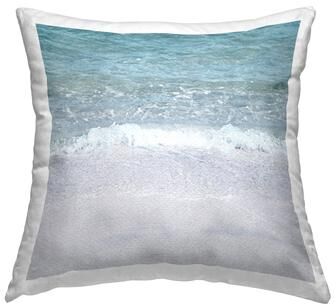
Stupell Foamy Sea Waves Beach Printed Throw Pillow by LSR Design StudioUpdate your home interiors easily with Stupell Decorative Printed Pillow. Pillows are printed in a wide variety of colors, styles and trends. Pillows arrive with inserts already zipped inside their case.44,49 $*Shipping: 0,00 $Secure redirect to the provider
-
Can sound waves be accelerated?
Sound waves cannot be accelerated in the same way that physical objects can be. Sound waves travel at a constant speed in a given medium, which is determined by the properties of that medium. However, the intensity or amplitude of a sound wave can be increased, which can give the perception of the sound being louder or more forceful. This increase in intensity does not change the speed at which the sound wave travels. **
-
Could sound waves be frozen?
No, sound waves cannot be frozen. Sound waves are vibrations that travel through a medium, such as air, water, or solid materials. Freezing typically involves the transformation of a substance from a liquid to a solid state due to a decrease in temperature, but sound waves are not physical substances that can undergo this kind of transformation. Instead, they are a form of energy that propagates through a medium. **
-
Do sound waves consist of atoms?
No, sound waves do not consist of atoms. Sound waves are vibrations that travel through a medium, such as air, water, or solids, by causing particles in the medium to vibrate. These vibrations create changes in pressure that our ears detect as sound. Atoms are the basic building blocks of matter and do not make up sound waves themselves. **
-
Are sound waves transmitted through walls?
Yes, sound waves can be transmitted through walls, although the extent to which they are transmitted depends on the material and thickness of the wall. For example, thin walls made of materials like drywall or wood will allow more sound to pass through than thick walls made of concrete or brick. Sound waves can also be reflected, absorbed, or diffracted by walls, which can affect how much sound is transmitted through them. Overall, while walls can block some sound, they do not completely prevent sound waves from passing through. **
Similar search terms for Waves
-
What are sound waves in physics?
Sound waves in physics are a type of mechanical wave that travels through a medium, such as air, water, or solids. They are created by the vibration of an object, which causes the particles of the medium to compress and expand, transmitting the energy of the vibration. Sound waves are characterized by their frequency, wavelength, and amplitude, and they can be described using the principles of wave mechanics, such as the wave equation and the Doppler effect. In addition to being the basis for the sensation of hearing, sound waves are also used in various applications, such as ultrasound imaging and communication technologies. **
-
Do sound waves generally rise upwards?
No, sound waves do not generally rise upwards. Sound waves are longitudinal waves that travel in all directions from their source. They propagate through a medium by causing particles in the medium to vibrate back and forth in the same direction as the wave is traveling. As a result, sound waves spread out in all directions from their source, rather than rising upwards. **
-
Are water waves only transverse waves or also longitudinal waves?
Water waves are primarily transverse waves, meaning that the particles of the medium (water) move perpendicular to the direction of the wave. However, water waves also have a small component of longitudinal motion, where the particles move parallel to the direction of the wave. This combination of transverse and longitudinal motion is what allows water waves to carry energy and propagate through the medium. **
-
How can one visualize and print audio waves?
One can visualize and print audio waves using software programs specifically designed for audio editing and visualization, such as Audacity or Adobe Audition. These programs allow users to import audio files and display the waveform graphically, making it easy to visualize the amplitude and frequency of the audio. Users can also use these programs to print the waveform by taking a screenshot of the visualization or exporting it as an image file. Additionally, there are online tools and websites that offer audio waveform visualization and printing capabilities, allowing users to upload their audio files and generate waveform images for printing. **
* All prices are inclusive of VAT and, if applicable, plus shipping costs. The offer information is based on the details provided by the respective shop and is updated through automated processes. Real-time updates do not occur, so deviations can occur in individual cases. ** Note: Parts of this content were created by AI.